Solar Panels in Winter
Do Solar Panels Work in Winter in Scotland?
Yes — solar panels work in winter in Scotland. Solar photovoltaic (PV) panels generate electricity from daylight rather than heat, so cold weather does not stop them working. What changes in winter is the amount of daylight available.
Scottish winter days are shorter, the sun sits lower in the sky and cloudy conditions are more frequent, so a solar PV system will normally generate less electricity in December or January than it does in late spring or summer. That seasonal variation should be allowed for when the system is designed.
This guide explains how solar panels perform through a Scottish winter, what affects winter output, how snow and frost matter, and where battery storage can help you make better use of the electricity your system produces.
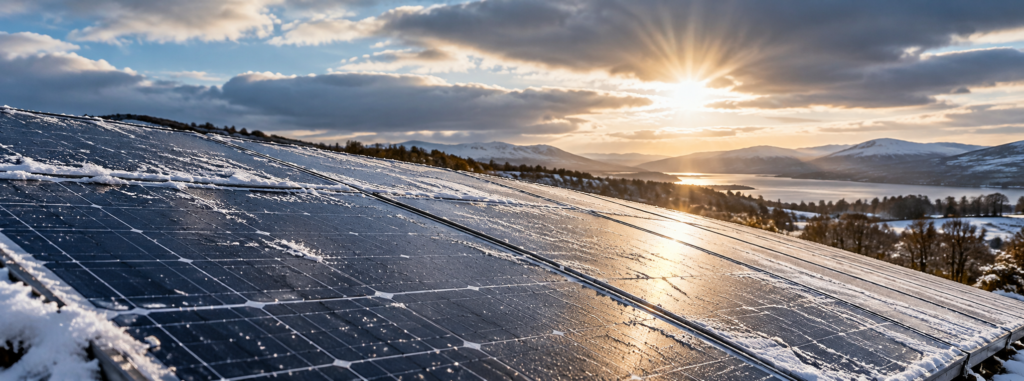
Do Solar Panels Generate Electricity in a Scottish Winter?
Yes. Solar PV panels convert light into electricity, which means they can continue generating on cold, overcast winter days. They do not need hot weather to operate. The Energy Saving Trust confirms that solar panels work in winter and on cloudy days, although generation is lower because the days are shorter and sunlight is less intense.
If you want a broader explanation of the technology itself, read our guide What Is Solar Power?. For homeowners considering an installation, our solar panel installation service across Scotland explains how Suntech Solar designs systems around the individual property.
Why Do Solar Panels Produce Less Electricity in Winter?
The biggest difference is daylight. Scotland has much shorter days in winter than in summer, so there are fewer hours in which panels can generate electricity. The sun is also lower in the sky, which reduces the solar energy reaching a roof compared with the brighter months of the year.
Cloud does not switch a solar system off, but heavy cloud will usually reduce output. That is why annual generation matters more than the figure shown by an inverter on one particular winter afternoon. Home Energy Scotland advises that solar PV is a practical renewable technology for Scottish homes and highlights roof suitability, system size and household energy use as important factors.
Does Cold Weather Reduce Solar Panel Performance?
Cold weather itself is not the problem people sometimes assume it is. Solar panels generate from light, not ambient warmth. A crisp, bright winter day can therefore still produce useful electricity even when the outside temperature is low.
The limiting factor is generally the amount of solar energy reaching the panels. Short days, low sun angles, shading and prolonged cloud all reduce the total energy available. A well-designed installation takes those seasonal changes into account rather than judging the system only by its summer peak output.
What About Snow, Frost and Ice on Solar Panels?
A light frost does not normally stop a solar PV system from operating once daylight reaches the cells. Snow is different: if panels are substantially covered, generation can be reduced until the snow clears. In many installations, the pitch of the roof and the smooth surface of the panels help snow slide away as conditions improve.
Homeowners should not climb onto a roof to clear snow from solar panels. If you have concerns about a system or its winter performance, use the monitoring information supplied with the installation and speak to a competent installer. MCS provides the certification framework for small-scale renewable energy installations in the UK.
Solar Panel Winter FAQs for Scottish Homeowners
Do solar panels work on cloudy winter days in Scotland?
Yes. Solar panels can still generate electricity when it is cloudy because photovoltaic cells respond to daylight, not just direct sunshine. Output will usually be lower under heavy cloud than on a clear day, but generation does not simply stop.
In Scotland, the larger winter effect comes from the combination of shorter daylight hours and a lower sun angle. A solar system should therefore be assessed over its expected annual generation rather than judged from a handful of dark winter days.
Will snow stop my solar panels generating electricity?
Heavy snow covering the panel surface can temporarily reduce or stop generation because light cannot reach the photovoltaic cells effectively. Once the panels are exposed again, the system can resume generating normally.
You should not climb onto a roof to clear snow yourself. Roof pitch, panel position and changing weather often allow snow to move naturally. If a system appears not to recover afterwards, check the monitoring system and contact your installer.
Can a solar battery help during the Scottish winter?
A battery can help you use a greater proportion of the electricity your solar panels generate by storing surplus power for later. However, winter solar generation is lower, so there may be less spare solar electricity available to charge the battery on some days.
Some batteries can also be charged from the grid during cheaper tariff periods. Our battery storage installation page explains solar-connected and standalone battery options in more detail.
Can Battery Storage Make Solar More Useful in Winter?
Battery storage can improve how much of your own solar electricity you use at home. If the panels generate more than the property needs during the middle of the day, a compatible battery can store some of that surplus for use later in the afternoon or evening.
During winter, however, there will be days when there is little surplus solar generation available. Depending on the battery and electricity tariff, some households also choose to charge from the grid during lower-cost periods. You can read more about this on our home battery storage page.
Is Winter Generation Included When a Solar System Is Designed?
It should be. A professional solar assessment considers expected generation throughout the year rather than promising the same output every month. Roof orientation, pitch, shading, usable roof area and the household’s electricity consumption all affect the right system design.
The Energy Saving Trust notes that solar panels are suitable across the UK, including cloudy conditions, while annual savings depend partly on where you live and how much generated electricity you use yourself. Our guide Are Solar Panels Worth It in Scotland in 2026? looks more closely at costs, savings and long-term value.
Find Out What Solar Could Generate for Your Scottish Home
The most useful figure is not a generic winter percentage — it is a realistic estimate for your own roof and electricity use. Suntech Solar has been installing renewable energy systems since 2011 and is MCS affiliated, NICEIC approved and RECC accredited.
If you are considering solar PV, book a free solar survey. We can assess your roof, likely shading, system size and household energy use before recommending an installation.
Want to Know How Solar Would Perform at Your Home?
Book a free, no-obligation solar survey and get a system recommendation based on your property, roof and electricity use. Suntech Solar installs accredited solar PV and home battery systems across Scotland.